by Jean Allen
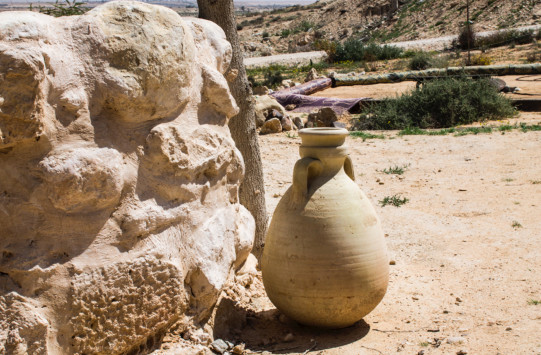
Something stood out to me in re-reading the very familiar story of the Samaritan woman at well. “Then the woman left her water jar and went back to the city.” It’s a sentence that has never stood out to me before but I think it may be an essential crux point.
In their conversation, the Samaritan woman was taking Jesus literally. She thought he was talking about ordinary well water that could magically be replenished, making it unnecessary to visit the well ever again. That was especially intriguing for her because, as a woman of loose morals, she had to visit the well at noon, the hottest part of the day, instead of drawing water in the early morning with the rest of the women, when she would have been shunned and castigated for her lifestyle.
And then, besides the intriguing claims Jesus was making about his living water, he was also drawing her into considering a spirituality that seemed wonderful but confusing. No definitive place where God could be found? Worshipping in spirit and in truth? What could that mean when they had been taught that truth was only situated in where God resided – either in a mountain or in Jerusalem? The clincher for her was that Jesus knew she had had five husbands and that she was living with a man who was not her husband. If nothing else made sense, that was real.
“She left her water jar…” In a life where her essential water had to be laboriously drawn up from a well by her in the heat of the day, she made a decision to take a leap of faith and left that symbol of her old life at the well. She had found something, someone, who promised a new and fulfilling life. “She left her water jar…”
What, in your life, could be the equivalent of the woman’s water jar?

 P ♰ C
P ♰ C 